
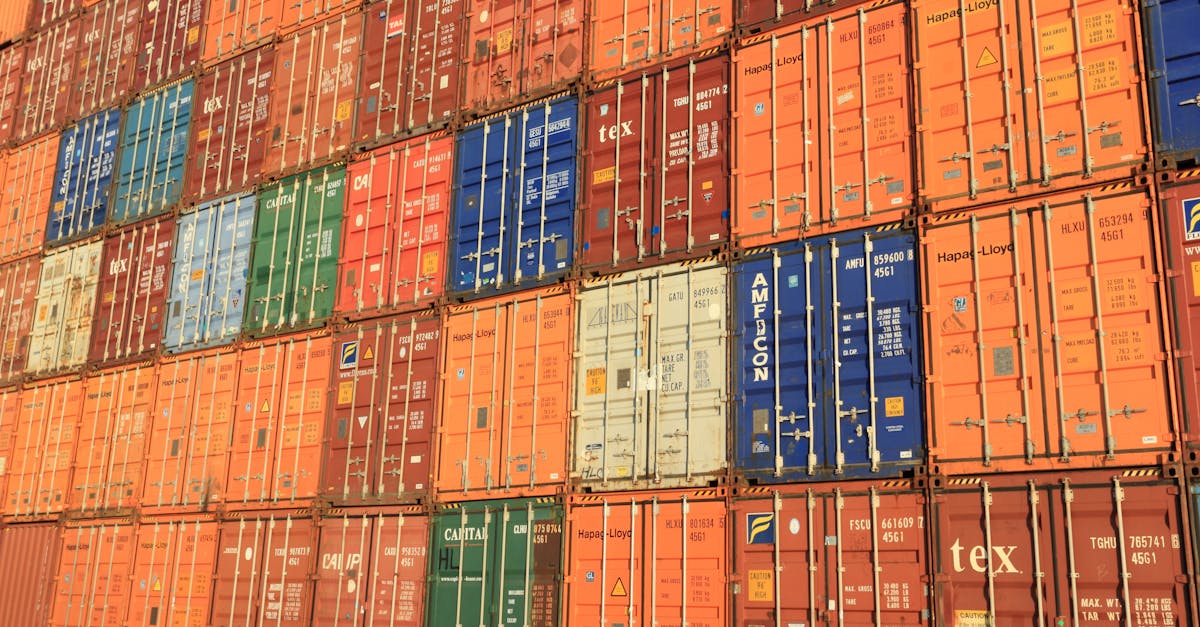
Wholesale container buying today is shaped as much by global policy shifts as it is by local market forces. As we navigate 2025, U.S. tariff actions and foreign policy pivots are no longer abstract developments — they’re redirecting the real costs, timing, and strategies every serious container buyer needs to master. At Lummid, we’re living these changes in real time alongside our customers, and we know how important it is to translate policy volatility into practical, actionable moves for buyers of all scales.
Executive Summary at a Glance
| Topic | Key Point | Actionable Insight |
|---|---|---|
| Tariff Actions | Sec.232: Autos 25% (Apr 3, 2025); Steel/Aluminum 50% (Jun 4, 2025); Wood/Furniture 10–25% (Oct 14, 2025) | Check mixed-origin content and HS codes; adjust procurement and timing. |
| Market Signals | Drewry WCI $1,669/FEU (Oct 2, 2025), 16 weeks of declines. U.S. Ports +1.7% YoY (imports +4.3%, exports –4.2%) | Use short-term buyer leverage; plan shipments considering post front-loading softening. |
| Cost Impact | Steel/aluminum tariffs (+50%) → est. +15–18% new-build cost. Wood/furniture tariffs → est. +8–10% for floors/interiors. | Implement index-linked surcharges; compare refurbishment vs. new build ROI. |
| Strategy | Leasing activity increased in 2025; used prices softened, regional variation exists. | Stage CAPEX quarterly; monitor lane spreads and dwell times. |
1. U.S. Tariff Timeline & Policy Shifts in 2025
Let’s start by spelling out what’s driving the current volatility. New and expanded U.S. tariffs are directly impacting container buyers, especially on steel/aluminum, automobile components, and wood products used in container construction and fitting.
- April 3, 2025 – Automobiles & Parts (Sec. 232, 25%): Any container or chassis with non-U.S. content, especially from outside North America, is exposed. Mixed-origin components must be actively tracked with up-to-date HS codes before you finalize procurement.
- June 4, 2025 – Steel & Aluminum (Sec. 232, 50%): The increase from 25% directly raised new container and chassis costs by an estimated 15–18%. This is not uniform: higher-spec or specialty equipment, especially with European or Asian steel, is most affected.
- October 14, 2025 – Wood/Furniture (Sec. 232, 10–25%): Applies to wooden floors, interior paneling, and furniture-grade fitting in selected container models. Realistically, allow 2–3 months between tariff announcement and full cost realization. Build price re-opener clauses into all larger orders.
Key takeaway: Always verify component origin before bulk buying. Procurement timing matters more than ever — front-loading led to short-term rate spikes, but these are often followed by a softening period as the market absorbs the new costs.

2. Macro & Trade Data: Reading the Signals
| Indicator | Latest | How to Use It |
|---|---|---|
| IMF Global GDP | 2025: 3.0%; 2026: 3.1% | Anchor annual procurement and CAPEX decisions. |
| WTO Outlook | Recovery in 2025; deceleration risk in 2026 | Set quarterly demand planning baselines. |
| Drewry WCI (Composite) | $1,669/FEU (Oct 2, 2025); 16 weeks of declines | Indicates strong near-term buyer leverage; time spot rate contracts accordingly. |
| Shanghai → Los Angeles/New York | $2,196/$3,200 per FEU | Reference for West/East Coast contract negotiations. |
| U.S. Top-9 Ports (H1 2025) | +1.7% YoY (imports +4.3%, exports –4.2%) | Front-loading is visible; expect import softening post-tariff. |
Practical Application: Time bulk purchase decisions and price negotiations with container suppliers to WCI downtrends, especially post front-loading waves, to maximize wholesale buying power. For a deeper discussion of how spot rates shape procurement, see Navigating Ocean Shipping Rate Drops: Strategies for Wholesale Container Buyers in 2025.
3. Real-World Impact: What Wholesale Buyers Need to Watch
- Container Demand & Pricing: The rush to import before tariff triggers (front-loading) creates rate spikes. But once tariffs hit, demand often softens and prices stabilize or dip near breakeven. That means buyers should be aggressive in securing short-term contracts and rebidding as rates reset.
- Supply Chain Network Effects: Blank sailings and changing vessel routings are common tools for carriers to balance supply. Expect more volatility in reliability. Having access to alternative routes (e.g., East Coast, Gulf vs. West Coast) is a strategic edge.
- Used & Leasing Market: In 2025, leasing activity increased due to upfront capital risk, with used container prices softening in most U.S. regions. Regional divergence is pronounced — some secondary markets present real bargains, especially on mid-age units.
- Material Cost Shocks: The 50% tariff on steel/aluminum translates directly to a 15–18% jump in new box and chassis costs; wood tariff effects vary but average +8–10% on affected flooring or interiors.
- Policy Risk & Surcharges: China-linked cargo faces extra scrutiny, and Section 301 actions remain fluid. Continued supplier diversification and margin stress-testing is a must for large-volume buyers.
It’s important to prioritize short-term lease renewals while policy scope remains unclear and stagger new purchases into quarterly or smaller batches. Index-linked surcharges tied to steel or WCI are no longer optional for serious buyers, they’re a risk management necessity.

4. Scenario Planning: Be Ready for Policy Whiplash
Wholesale buyers should condition their playbooks based on three market scenarios for 2025–2026. Each requires distinct triggers and responses:
| Scenario | Policy Path | Market Effect | Trigger Signals | Recommended Action |
|---|---|---|---|---|
| Easing | Partial rollback, expanded exemptions | Rates stabilize, imports rebound | Steel prices drop >10%; exemption headlines | Resume new unit purchases and extend contracts |
| Status Quo | Tariffs hold (25–50%) | Flat import pace, more leasing | WCI in $1,600–1,800 range; no fresh tariffs | Lean into lease renewals, defer long-term CAPEX |
| Tightening | Expansion or retaliation | Freight downturn, margin squeeze | Steel up 15%; WCI slips under $1,500 | Reduce exposure, negotiate pass-through clauses |
Internally, we use steel indices and WCI benchmarks as alert levels to trigger procurement or repricing actions — and recommend our customers do the same for responsive planning.
5. Strategic Guidance for Bulk Buyers & Depots
Ranking your next steps by urgency and ROI can help steer through uncertainty. Here’s what has worked best for us and our network:
- High Priority: Dual Procurement — Blend leasing and selected used buys for maximum flexibility. Avoid big, single outlays; stagger capital expenditures quarterly.
- High Priority: Continuous Market Monitoring — Always set price alerts (like changes in WCI or steel indices). Subscribe to USTR and CBP updates to respond fast to tariff movements.
- Medium Priority: Gateway Diversification — Routinely compare landed costs (LA/LB vs. Savannah, NYC, Houston) to find margin edges or bypass congested/expensive lanes.
- Medium Priority: Flexible Contracts — Push for WCI- or SCFI-linked clauses with regular (every 60–90 days) price reviews.
- Watch: Pass-Through Surcharge Mechanisms — Protect your margins by tying supplier or customer surcharges directly to steel/aluminum indices as needed.
Acting on these strategies is not just about cost efficiency — it’s about ensuring continuity when shocks hit or policy direction reverses. For buyers facing new challenges with supply consistency, our recent blog How to Secure Consistent Supply of Wholesale Shipping Containers in a Volatile Market provides additional solutions specific to 2025’s unique context.
6. Fast Reference: Glossary of Key Terms
| Term | Definition | Relevance |
|---|---|---|
| Section 232 | U.S. law on national security tariffs | Key driver of steel/aluminum, autos, and wood tariffs |
| Section 301 | Tariffs tied to unfair foreign trade practices | Risk for China-linked supply; dynamic scope |
| WCI (Drewry World Container Index) | Weekly measure of global spot ocean freight rates | Essential for timing inventory buys and contract resets |
| Front-loading | Accelerating imports to beat tariffs or cost hikes | Creates short spikes, then market softening |
| Index-linked Clause | Contract terms tied to external indices like WCI, steel | Builds risk protection into large-scale buys/contracts |
Closing Note: Our Commitment to Wholesale Buyers Facing Volatility
As a partner that moves containers from Asia and Europe into the U.S. daily, we understand the pain points of unpredictable pricing, logistics crunches, and ever-changing regulations. The one constant we offer our buyers is trusted, direct import supply with broad depot access that can flex with policy tides.
For personalized support on your 2025–2026 plans, including price risk management and procurement timing in this volatile new normal, reach out to our team at Lummid Containers. We’ll help you map the best path for stable, competitive container sourcing and real, bottom-line resiliency.
This guide reflects our on-the-ground experience and official industry data as of October 2025. For strategic advice or wholesale container quotes, visit our contact page any time.
