
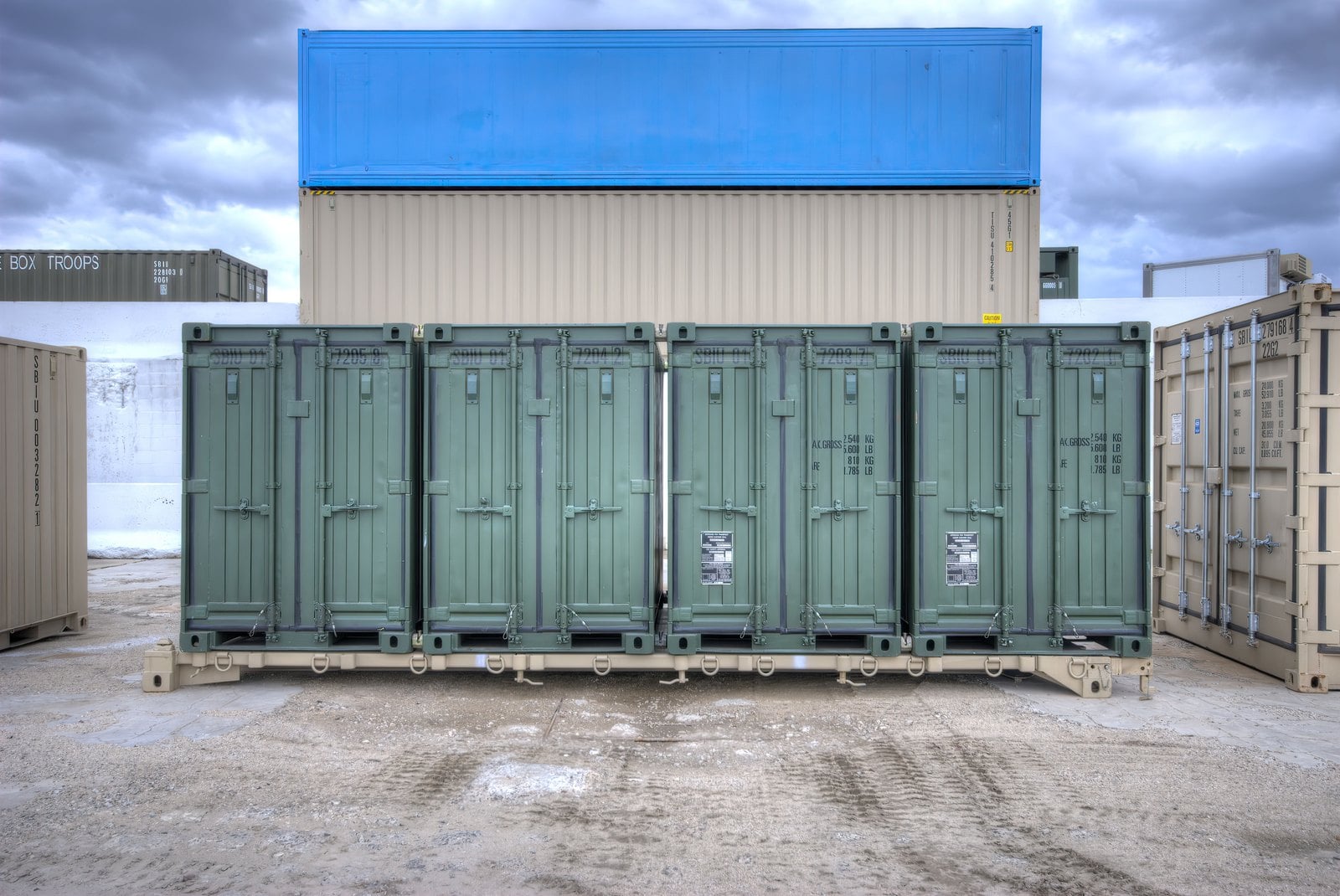
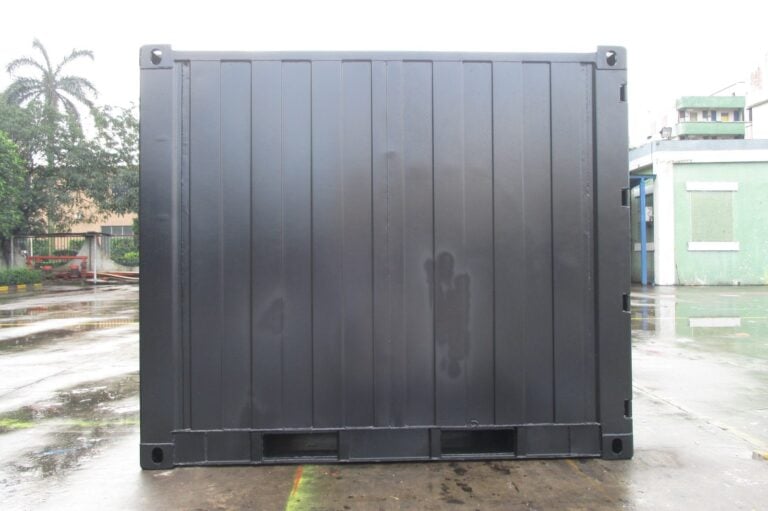
A QuadCon is a small steel container built so that four units coupled together take up the footprint of one standard 20′ ISO container. Our QuadCon measures 8′ x 4’9″ x 6’10” on the outside, weighs 1,764 lb empty and carries up to 9,436 lb, for a maximum gross weight of 11,200 lb. A coupled set travels like a 20′ box by ship, rail and truck, which is why the U.S. military uses them in large numbers.
What is a QuadCon container?
The name comes from the math. Four units fill one 20′ footprint, the same way three TriCons or two BiCons do. The U.S. Army transportation manual FM 55-65 describes the QuadCon as a lockable, weatherproof, reusable container with a welded steel frame, ISO corner fittings for lifting, restraint and coupling, and a base a forklift can enter from all four sides.
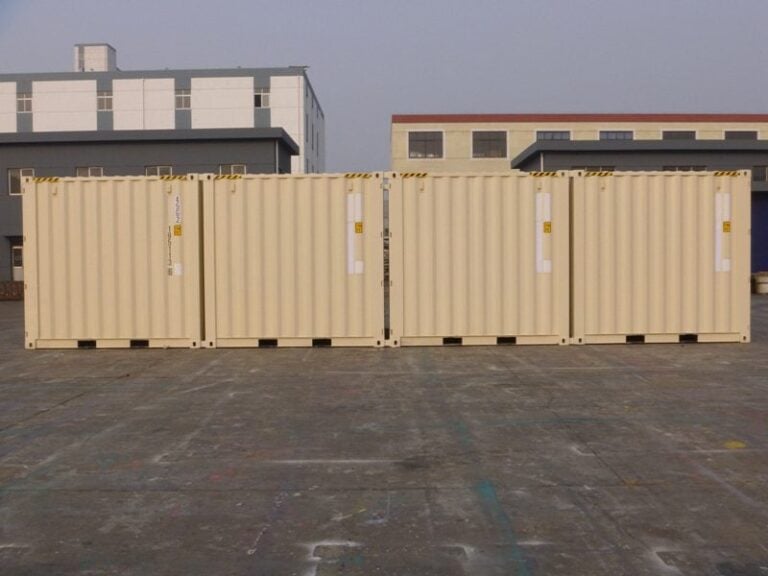
Each unit stands on its own, with its own doors, locks and data plate. Coupled into a set of four, the group presents standard 20′ corner castings to cranes, spreaders and twist locks, and fits the 20′ cell guides of a container ship.
QuadCon dimensions and weights
These figures come from the Lummid technical specification for the 6’10” QuadCon. Length is the 8′ side.
| Specification | Imperial | Metric |
|---|---|---|
| External length | 8′ 0″ | 2,438 mm |
| External width | 4′ 9 3/8″ | 1,457 mm |
| External height | 6′ 10″ | 2,082 mm |
| Internal length | 7′ 6 3/8″ | 2,296 mm |
| Internal width | 4′ 7 7/8″ | 1,419 mm |
| Internal height | 6′ 2 1/2″ | 1,889 mm |
| Door opening width | 4′ 5 5/8″ | 1,362 mm |
| Door opening height | 5′ 10 1/2″ | 1,791 mm |
| Internal capacity | 217 cu ft | 6.15 cu m |
| Max gross weight | 11,200 lb | 5,080 kg |
| Payload | 9,436 lb | 4,280 kg |
| Tare weight (plus or minus 2%) | 1,764 lb | 800 kg |
| Fork pocket size (W x H) | 14 1/2″ x 4.45″ | 368 x 113 mm |
| Fork pocket centers, side | 2′ 10 3/4″ | 882 mm |
| Fork pocket centers, door end | 2′ 4 7/8″ | 733 mm |
We also build QuadCons in an 8′ height. If you need that version, say so in your quote request and we will confirm its figures. The payload on the data plate is a rating, not a load plan. Spread the weight and secure it to the lashing rings.
How a QuadCon is built
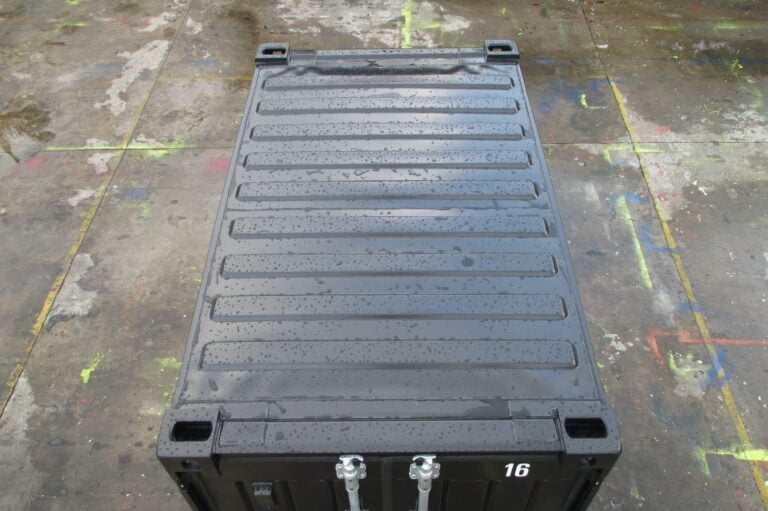
- Steel. Corten steel frame, with corrugated side walls, roof and doors. Side and roof panels are 1.6 mm. Door panels are 2.0 mm.
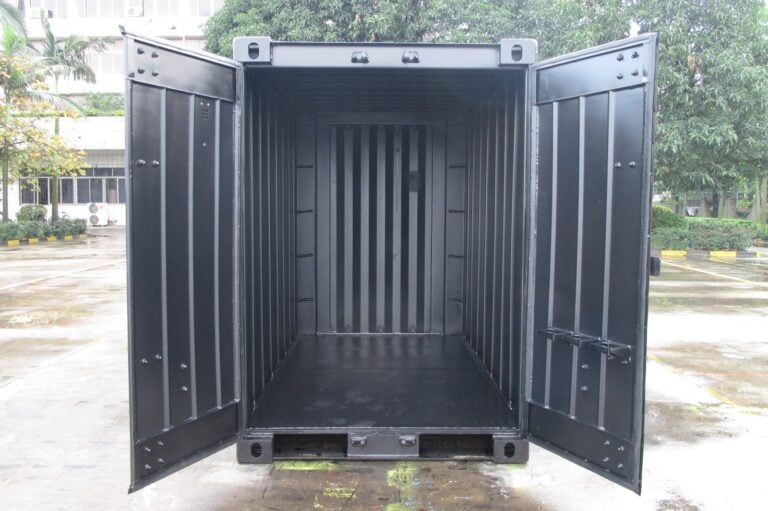
- Floor. 4.0 mm non-slip checkered steel plate, welded continuously to the bottom rails.
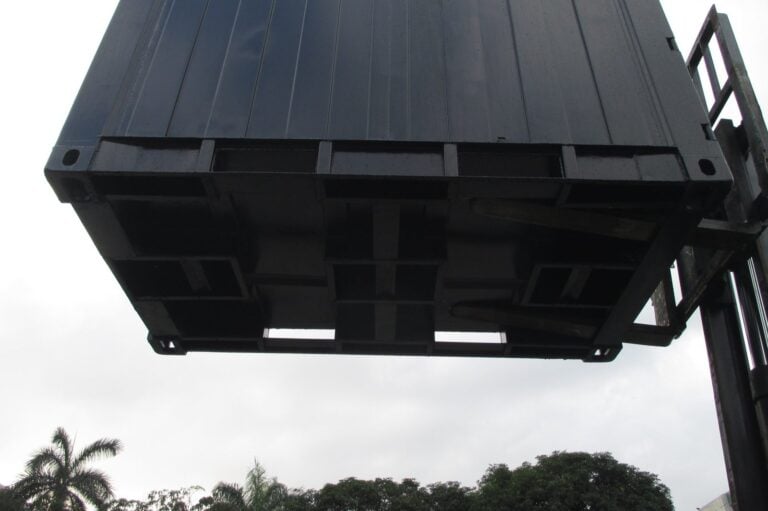
- Base. Four-way fork pockets, so a forklift can pick the unit from any side.
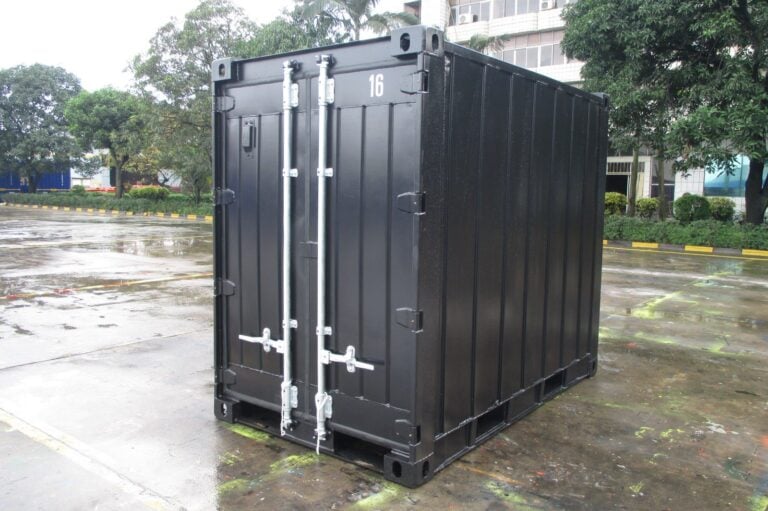
- Doors. Each door swings 270 degrees and has its own locking bar with ice-breaker cams, stainless steel hinge pins and a double-lip EPDM rubber gasket.
- Roof. Cambered about 6 mm upward so water runs off.
- Ventilation. Two labyrinth-type vents.
- Lashing. Lashing rings on the top and bottom side rails, each rated for a 1,000 kg (2,205 lb) working load.
- Corner fittings. ISO 1161 corner castings.
- Paint. Steel is shot blasted, then coated with zinc-rich epoxy primer, epoxy and an acrylic topcoat outside (110 microns total), epoxy inside (70 microns) and bitumen underneath (230 microns).
Standards and testing
The QuadCon is designed, built and tested to ISO 1496/1, the Convention for Safe Containers (CSC) and the Customs Convention on Containers (TIR). It is built for road, rail and sea, above and below deck, and for temperatures from -22°F to 176°F (-30°C to 80°C).
- Stacks 6 high in a ship’s cell guides at max gross weight, and 4 high on deck when lashed at the corner fittings.
- Lifts full or empty from the top corner fittings, the bottom corner fittings or by forklift.
- The prototype is tested for stacking, lifting, restraint, end and side wall strength, roof strength, lashing points and water tightness.
- Every 100th unit gets a lifting and stacking test. Every unit gets a dimension check, door check, light leak test and weatherproof test, and is inspected by a classification society surveyor.
How the coupling works
QuadCons connect side by side with couplers that lock the corner fittings of neighboring units together. Once four units are joined, the set lifts and travels as one 20′ unit. Teams can pack and seal units separately, ship them together through the intermodal system, then split them up for final delivery by forklift.
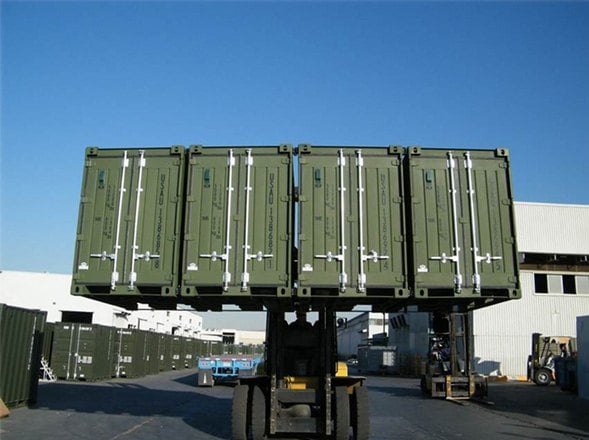
QuadCon photos
What QuadCons are used for
The U.S. Armed Forces are the largest user. FM 55-65 recommends them for contingency deployments because unit equipment can move in the same container that stores it at home station. Outside the military, they suit any job that needs weatherproof, forkliftable, stackable storage in tight spaces: telecom and utility sites, remote work camps, emergency management stores, tool and parts cribs on job sites, and ships or offshore platforms where deck space is tight.
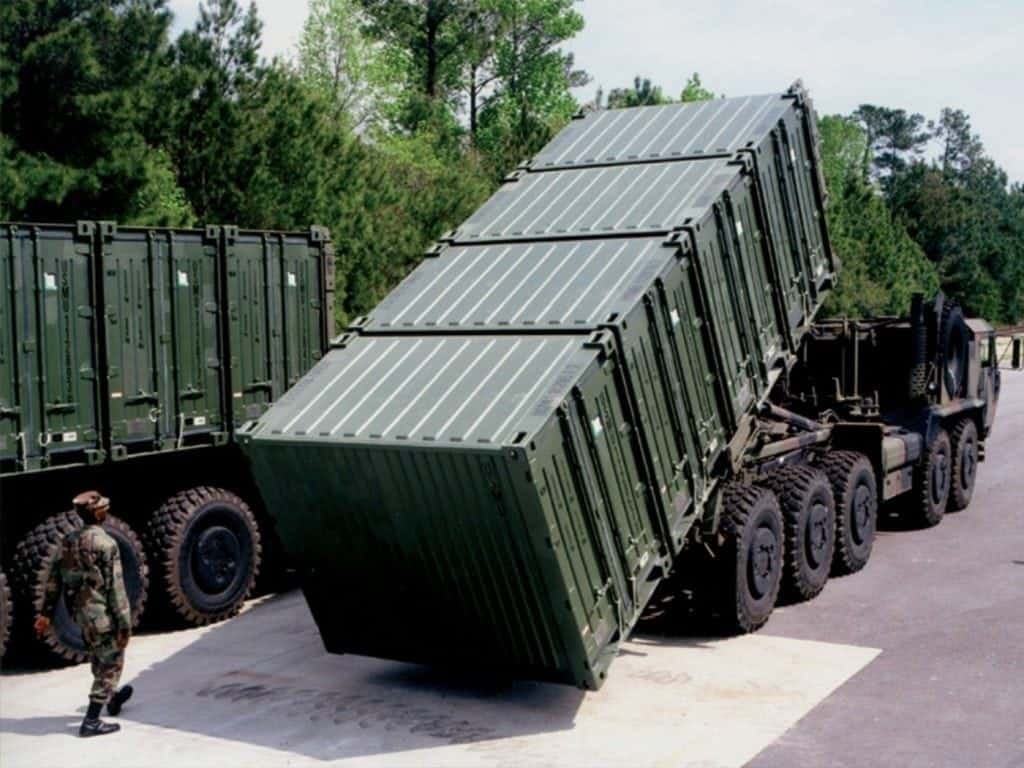
Compared with TriCons and BiCons, the QuadCon trades cubic capacity for handling flexibility. Our TriCon vs QuadCon vs BiCon comparison covers the choice.
What to check before you buy
- Data plate and certification. Confirm the CSC plate is present and legible, and that the rating matches your transport plan.
- Couplers. If you plan to ship coupled, confirm the couplers are included and matched.
- Door layout. Make sure the door layout fits how you will load and where the units will sit.
- Height. Confirm 6’10” or 8′ before you order. Both heights circulate in the surplus market, so check the data plate on used units.
- Condition grade. For used units, the same one-trip, cargo-worthy and WWT logic applies as for full-size boxes. Our container grades guide explains each grade.
Ordering QuadCons
We build QuadCons to order. We do not hold them in stock, so plan for build and shipping time, and start early if your dates are firm.
For bulk military and specialty needs, see our military containers page, or request a wholesale quote with the quantity, height, door layout and delivery points you need.
Sources
- Lummid technical specification, QuadCon 8′ x 4’9″ x 6’10” (dimensions, ratings, materials, construction and testing)
- U.S. Army FM 55-65, Appendix E (QuadCon description, 20′ coupling, cell-guide compatibility)