When you manage reefer fleets at scale, the genset choice is far more than a technicality—it’s a linchpin in cold chain reliability, customer trust, and your cost structure. At Lummid Containers, we’ve spent decades serving both resellers and bulk buyers who demand more than just hardware. Below, we dive deep into underslung versus clip-on gensets, zeroing in on their real-world pros, cons, and buyer considerations. Whether you need to build a flexible rental pool or streamline a dedicated long-haul fleet, this guide will help you choose with confidence (and avoid expensive regrets).
What is a Genset—and Why Does it Matter for Reefer Operations?
Every refrigerated (reefer) container depends on one thing above all: consistent power during every mile and every transfer. That’s the genset’s job. By supplying off-grid electricity, a diesel genset keeps perishables cold when the container leaves shore power (at ports, warehouses, or staging yards) or during remote haulage. If there’s a gap, spoilage happens, insurance gets tough, and reputations suffer.
Clip-On Gensets: Maximum Flexibility for Busy Intermodal
How Clip-On Gensets Work
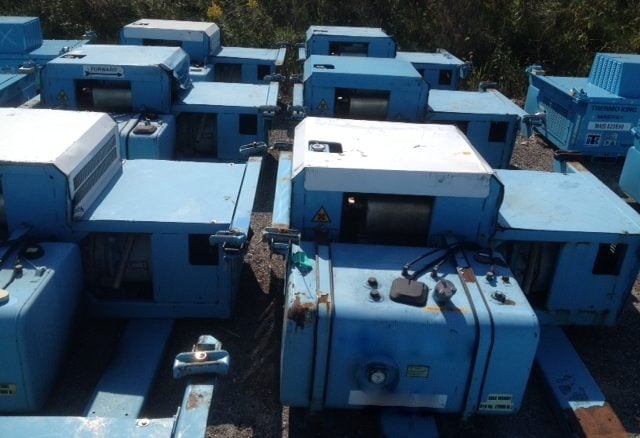
Clip-on gensets latch onto a reefer container’s front (corner castings) using a secure pin-mount system. You attach or remove them quickly—no tools or special handling gear required. With average weights around 1,675 lbs and large 130-gallon fuel tanks, a clip-on genset is ready for week-long journeys or high-turnover depot inventory.
- Adaptability: The clip-on stays with the box as it moves truck-rail-port, critical for intermodal logistics and unpredictable routing.
- Rapid deployment: Attach or swap gensets in minutes. If a reefer needs to become cold-ready for a spot lease or pop-up storage job, clip-ons win.
- Independent asset: Easier stock management for resellers—clip-ons can be leased or sold independent of the container, then repositioned as demand shifts.

Where Clip-Ons Shine
- Intermodal transport with frequent mode changes (truck-rail-port)
- Depot yards and storage lots without easy access to shore power
- Fleets with many unique customers and short-term deployments
- Leasing pools needing to maximize upsell and turnaround
Clip-on gensets provide both 230 and 460 volt options, supporting most reefer container models. With their extended runtime—often up to 100 hours on a single tank—they’re a top pick for distant cross-country routes and high-churn container inventories.
Underslung Gensets: The Stable Choice for Dedicated Fleets
How Underslung Gensets Work
Underslung gensets mount underneath the trailer chassis and are typically installed between axles using 4-point place-mount systems. With a typical weight near 1,370 lbs and a 50-gallon fuel tank, they become part of the vehicle, not the box. This makes them less portable but more stable for long-haul work.
- Low center of gravity: Mounting under the chassis helps handling, reduces accident risk on curves, and improves crosswind stability for highway work.
- Permanence: Ideal for companies running pre-set routes with the same box/chassis combo. Once installed, routine use is simple.
- Vibration resistance: Built-in suspension protects both reefer and chassis, allowing longer road hours without mid-trip maintenance stops.

Best Use Cases for Underslung Units
- Dedicated trucking fleets running fixed route schedules
- Bulk buyers with consistent lane requirements
- Rail/truck intermodal, when containers stay on same chassis (not decoupled at every leg)
- Environments where safety and handling come before rapid inventory swaps
Underslungs are engineered for reliability and ease of maintenance in fleets where each genset will remain paired to its specific vehicle/platform.
Side-by-Side Comparison: Key Factors to Weigh
| Factor | Clip-On Genset | Underslung Genset |
|---|---|---|
| Installation time | Minutes (attach/detach easily) | Hours (permanent; single install) |
| Weight impact | Heavier on container (1,675 lbs) | Distributed on chassis (1,370 lbs) |
| Fuel capacity | 130 gallons (long runtime) | 50 gallons (shorter intervals) |
| Portability | Moves with container | Fixed to one chassis |
| Best use | Short-term, multi-customer, flexible | Long-haul dedicated, fixed fleet |
| Maintenance | Multiple locations; asset pool | Centralized per vehicle |
What About Total Cost of Ownership?
Genset headaches can destroy margin for both resellers and bulk buyers. Here’s how we see it at Lummid based on years of real procurement outcomes:
- Clip-on gensets: Let you move power assets between containers, which is very efficient for high-turn inventory and responding to seasonal spikes. They’re ideal if you need to lease short-term to varied customers. However, if running many in parallel, expect more maintenance and higher aggregate fuel usage than a centralized permanent solution.
- Underslung gensets: Require the up-front cost of install and compatible chassis, but ongoing labor and refueling are streamlined. For companies running fixed schedules and regular service, these cost savings can be substantial over the genset lifespan.
We’ve seen that larger buyers controlling their own logistics often lean toward underslung units after crunching three-year TCO numbers, especially when labor and downtime risk matter more than per-asset flexibility.
2025+ and Beyond: Electric Gensets and Sustainability Trends
The next wave is electric gensets, offering zero-emission operation and major reductions in both fuel and upkeep. While not mainstream for every long-haul route yet, bulk buyers in regions with tough anti-idle laws (like California ports) or those motivated by ESG mandates are beginning to spec electric models in both underslung and clip-on configurations.
For buyers considering electrification, assess the practicalities before investing: Will you have reliable charging infrastructure at both ends? Are your reefer hauls consistently within battery range, or are diesel backup units still needed for contingencies?
Persona-Based Guidance: How to Choose for Your Fleet or Inventory
Wholesale Resellers and Depot Operators
Flexibility and high equipment utilization are everything. Clip-on gensets are typically the smart choice for your inventory stack. You can move units between containers, upsell power solutions to customers on the fly, and avoid the logistical headache of pairing specific chassis with every box. We recommend pairing your clip-on genset inventory with a diverse mix of new and used reefer containers to satisfy customer demand for various grades and sizes across seasons and geographies.
Bulk Buyers: Construction, Government, Logistics, Agriculture
If you manage your own trucking, or you’re buying containers for a fixed closed-loop supply chain, go underslung. The stability and ease of scheduled service, along with better handling, make up for less asset flexibility. Plus, centralizing genset maintenance can cut downtime and labor costs across your transport network. If your operations are exposed to harsh climates, you may benefit from deeper insights in our seasonal fleet prep article, How to Source Reefers and Gensets for Winter Starts.
Multi-Modal and Hybrid Operators
Those shuttling containers between truck, rail, and possibly ocean often need clip-on flexibility. If your business is scaling into hybrid logistics (such as 3PLs or fast-growing regional networks), keeping power with the box across handoffs matters above all else. The simplicity saves time whenever route schedules or end destinations are in flux.
Special Considerations: Safety, Stacking, and Compliance
- Stacking and Storage: If depot stacking or high-density storage is routine, underslung units (with no hardware protruding from the box) simplify operations. Containers with clip-ons attached can’t be double-stacked safely.
- Road Safety: Underslung gensets help trailers hug the road better, which can be a game-changer for mountainous routes or rough highways.
- Regulatory Dynamics: Always check with your state or local guidelines for genset diesel emission/compliance standards—particularly if operating near ports or regulated zones.

Final Checklist: Choosing the Right Genset for 2025
- Prioritize clip-on gensets if you want maximum mobility, work with frequent intermodal transitions, or manage a core business in rental or resale pools.
- Opt for underslung gensets if you operate a fixed fleet, want safety and stacking benefits, or need streamlined labor and service workflows over years of ownership.
- For forward-looking bulk buyers, explore electric genset options as they enter the mainstream—especially if emissions rules are tightening in your region.
- Always source from partners who understand both the tech specs and operational realities. Chosen wrong, a genset becomes a weak link. Chosen well, it’s a silent workhorse that keeps you ahead.
Ready for Fleet Upgrades? Let’s Collaborate
The right genset unlocks operational freedom and cold chain reliability. Whether you want the seamless intermodal advantages of clip-on units or the discipline and safety of underslung installation, our team at Lummid is here to help you build your perfect reefer solution. Our reach across U.S. depots, global import pipelines, and technical expertise in both genset and container pairing puts your operation in pole position for 2025 and beyond.
If you’re ready to optimize your reefer fleet or expand your reseller inventory, explore our reefer and genset options or connect directly with our experts for personalized guidance.
