
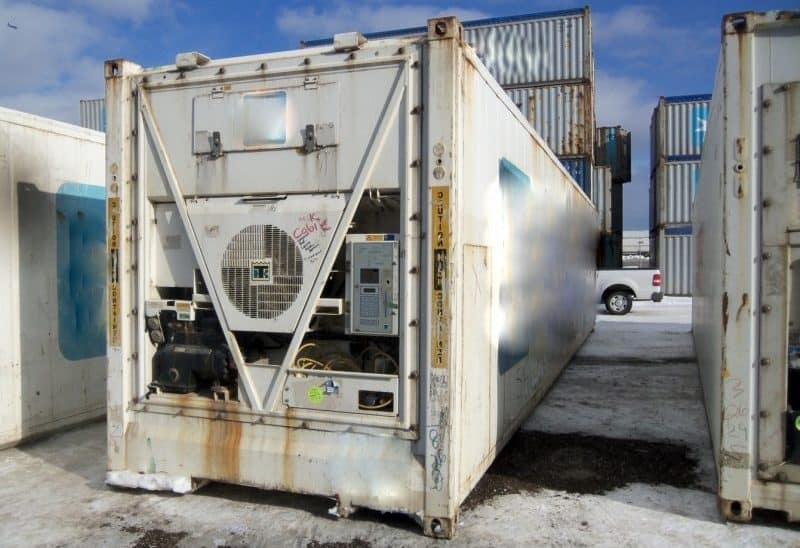
A used reefer (refrigerated container) gives you cold storage or a cold chain box for a fraction of the cost of a new one. Buying one wholesale works differently than buying a dry container, so here’s what to check, from working condition to power and gensets.
Working or non-working
This is the first choice, and it sets the price.
- Working reefers come with a valid pre-trip inspection (PTI). A PTI confirms the refrigeration unit runs and holds temperature. Pick working units if you need to ship or store chilled or frozen products.
- Non-working reefers cost less. Buyers use them as insulated storage, repair the unit themselves, or reclaim parts. The insulated walls keep the inside steadier than a dry container, even with no power.
Sizes
| Reefer | Outside size (L x W x H) | Typical use |
|---|---|---|
| 20ft steel | 20′ x 8′ x 8’6″ | Smaller sites, farms, restaurants and back-of-house cold storage |
| 40ft high cube steel | 40′ x 8′ x 9’6″ | Shipping, food distribution and larger cold storage |
The 40ft high cube is the most common reefer size. The refrigeration unit and insulation take up room, so inside space is smaller than a dry container of the same size. Ask for the inside dimensions on the units you’re quoted.
Refrigeration unit brands
Reefers carry units from Carrier, Thermo King, Daikin and Star Cool. Brand matters for parts and service near you, so ask which brand and model each unit has before you buy.
Power
Most reefer units run on 460-volt three-phase power. Many farms, warehouses and job sites don’t have that. Check your site’s power first. If you don’t have it, you’ll need a generator set or an electrician.
Gensets
- Clip-on gensets mount on the front of the reefer and move from box to box.
- Underslung gensets mount under the chassis and stay with it.
Lummid sells Carrier and Thermo King gensets, running or non-running. Our guide compares clip-on and underslung gensets in more detail.
The box still matters
A reefer is still a container. Check the floor, doors, door seals and walls the same way you would on a dry box. Damaged insulation panels or bad door seals cost you cold air. Our container grades guide explains what each grade covers.
How buying wholesale works
- Tell us what you need. Size, working or non-working, quantity and location.
- Get a quote from the nearest depot. Lummid sells from 350+ container depots across the U.S. and Canada.
- Pay and get a release. Wholesale orders are usually paid by wire, ACH or check. Resellers send a resale certificate.
- Pick up or arrange delivery. Depots are working yards, not walk-in lots. We can connect you with local drivers or schedule delivery.
- Check the unit before you leave. Once a container leaves the depot, it counts as accepted. Raise any problem at pickup.
Questions buyers ask
What is a PTI on a reefer?
A pre-trip inspection. It checks that the refrigeration unit runs and holds temperature before the box is used.
Can I use a non-working reefer for storage?
Yes. Many buyers use non-working reefers as insulated storage, with no power needed.
Do I need a genset?
Only if your site doesn’t have the right power. Most reefer units need 460-volt three-phase power.
Do you sell gensets separately?
Yes. Clip-on and underslung gensets, running or non-running.
See all reefers and gensets, or request a quote or call (888) 471-9099.