
Let’s be honest: standard shipping containers are the tanks of the storage world. They are bulletproof, stackable, and capable of surviving a trip across the Pacific in a typhoon. But for the average homeowner or small business owner, they have one massive, steel-plated flaw: they are a logistical nightmare to move.
If you want a 20ft ISO container in your backyard, you need a tilt-bed truck, a clear 60-foot runway for delivery, and a prayer that the driver doesn't crush your septic tank or take out your prize-winning rose bushes.
At LUMMID CONTAINERS, we’ve seen too many people compromise on storage because of delivery logistics. That is why we introduced the Modular Pop-Up Container lineup. It is the storage solution that ships flat, assembles like a high-tech puzzle, and doesn't require a crane to get over your fence.
The "Middle Child" Problem: Why 10ft Matters
In the shipping world, 20-foot and 40-foot units are the gold standard. But in the real world, your driveway, your job site, or behind your retail shop, those units are often overkill.
Sourcing a standard 10ft container (a "DuoCon" or "BiCon") is notoriously difficult and surprisingly expensive because they aren't standard international shipping sizes. Our modular units bridge that gap, offering sizes ranging from a compact 7ft to a full 20ft, with the 10ft unit being the absolute sweet spot for backyard storage.
Technical Specifications: Standard vs. Heavy Duty
Not all pop-up containers are created equal. Depending on whether you're storing lawn furniture or heavy industrial equipment, you need to choose the right "muscle" for the job.

1. The Standard Self-Assembled Unit
These are the workhorses for residential and light commercial use. They are lightweight enough to be handled by two or three people but tough enough to keep the elements out.
- Floor Load Capacity: 250 kg/m² (About 51 lbs per square foot).
- Steel Thickness: 0.7mm to 2.0mm depending on the component.
- Security: Features a secure locking system and forklift pockets for easy repositioning once assembled.
- Best For: Backyard tools, bikes, seasonal inventory, or document storage.
2. The Heavy Duty "Puzzle" Container
When you need to go vertical or face high-wind environments, you step up to the Heavy Duty Modular Puzzle. These units aren't just boxes; they are engineering marvels designed for industrial-grade ROI.

- Floor Load Capacity: 550 kg/m² (Over 112 lbs per square foot). That is more than double the standard capacity.
- Wind Rating: Rated for speeds up to 172.5 km/h (119.6 mph). This is critical for coastal regions or open plains.
- Stackability: These units are designed to be stacked, allowing you to maximize your storage footprint without increasing your land costs.
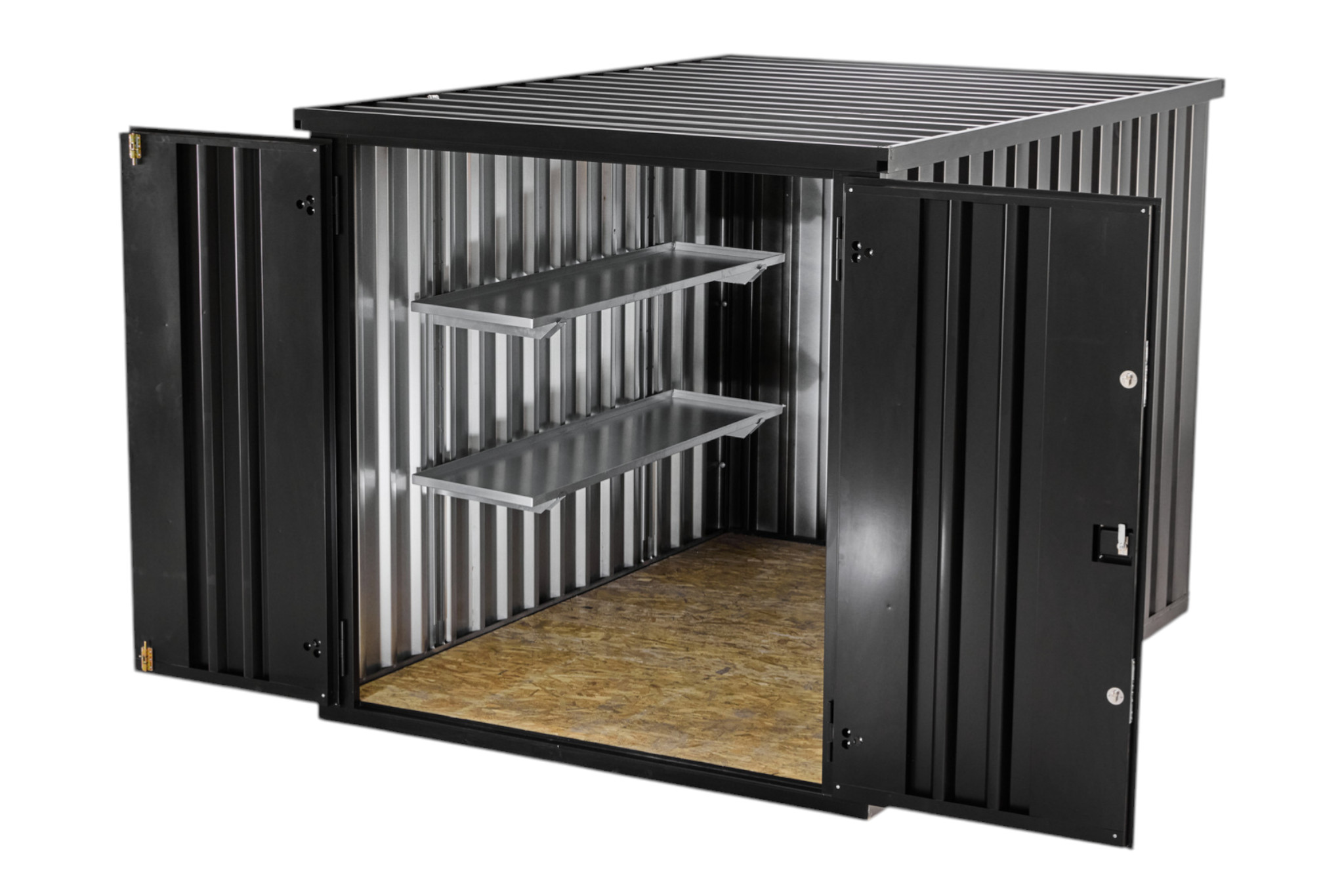
- Customization: They come with shelving kit options and are linkable to create larger, contiguous spaces.
The "Puzzle" Design: Assembly Without the Headache
The biggest barrier to modular storage is usually the fear of assembly. We’ve all spent four hours crying over a Swedish bookshelf. This isn't that.
Our modular design uses a "puzzle" logic. The panels are designed to interlock securely, using high-quality bolts and integrated seals.
The Assembly Process:
- Foundation: Level the ground (or use a simple gravel pad).
- Floor Placement: Lay down the base.
- Wall Panels: Slot the side and back panels into the floor channels.
- Roof & Doors: Secure the top and hang the doors.
- Secure: Bolt the components into a rigid, monolithic structure.
The result is a secure, weather-tight unit that looks like a permanent fixture but can be disassembled and moved if you decide to relocate your business or move houses.
Radical Transparency: The Financial Impact of Going Modular
Let’s talk numbers. Why would you choose a pop-up over a used 20ft "Wind and Water Tight" (WWT) container?
1. Zero "Drayage" Drama
Shipping a standard container requires specialized trucking. Shipping container costs are heavily influenced by the "last mile" delivery. A pop-up container ships flat. We can fit multiple units on a single standard flatbed, drastically reducing the freight cost per unit.
2. No Modification Labor
If you want a door in the side of a standard container, you’re hiring a welder, cutting steel, and compromising the structural integrity of the box. Modular units are designed with these features in mind from day one. You get the configuration you need without the "after-market" headache.
3. Footprint Efficiency
A 40HC container is great for wholesale logistics, but it's a liability if it sits half-empty. You’re paying for the space you aren't using. Modular units allow you to scale your storage exactly to your needs. Start with a 10ft unit; if you outgrow it, link another one to it.
Real-World Scenarios: Who is Using These?
The Backyard Hobbyist
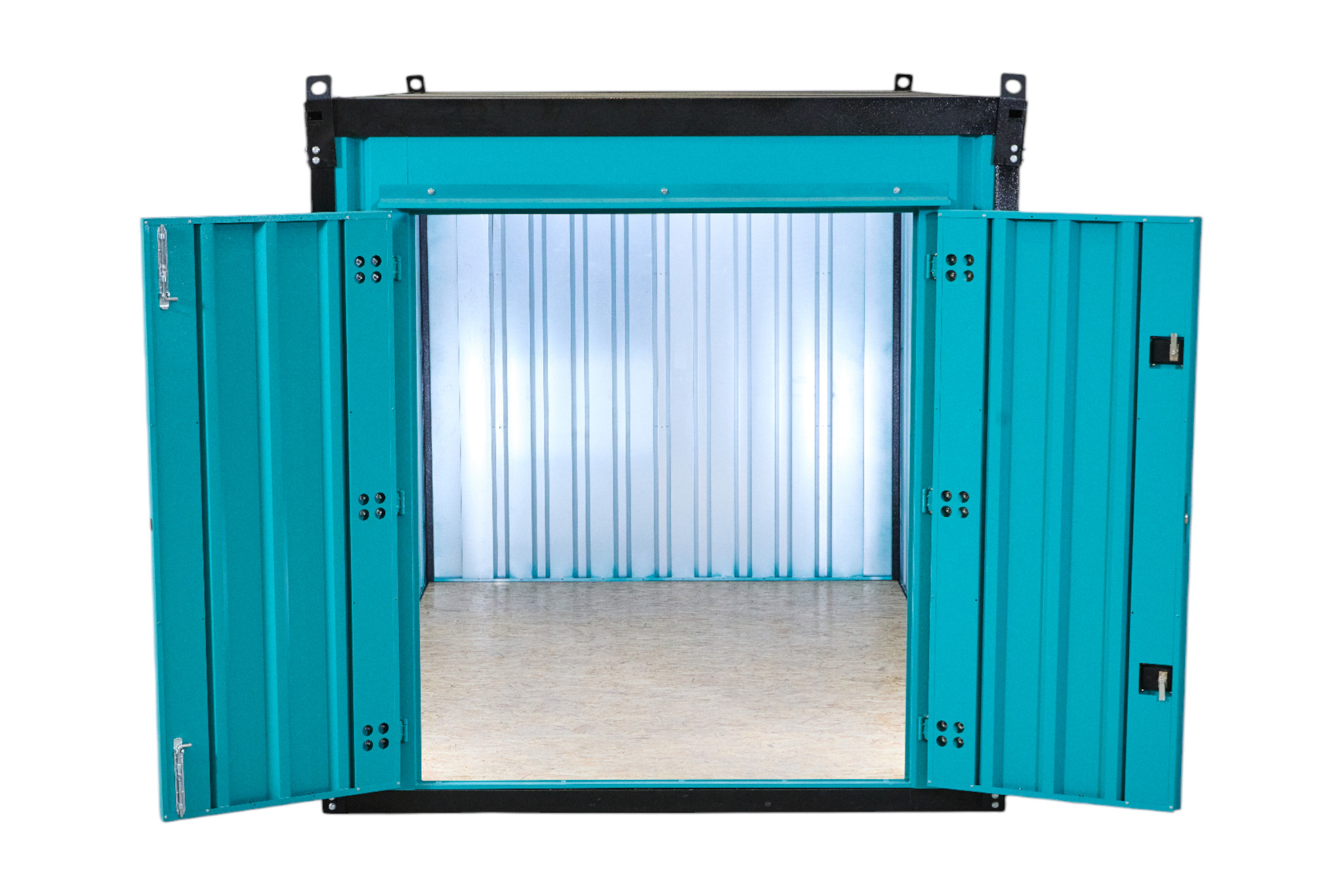
You have a classic car in the garage and no room for the lawnmower, the holiday decorations, and the pressure washer. A 7ft or 10ft modular container sits neatly at the end of your driveway or in a side yard. Because it's black or teal and has a clean, corrugated look, it doesn't look like a rusted relic from a shipyard.
The Small Retailer
If you’re running a boutique or a small e-commerce site, seasonal inventory is your enemy. You need space in November that you don't need in July. The ability to assemble a secure, stackable storage unit in your parking lot, and then take it down when the rush is over, is a major win for your bottom line.
The Construction Site
Contractors need secure tool storage that can move from site to site. Unlike traditional sheds, these containers have forklift pockets. You can drop a 13ft unit at a job site, fill it with thousands of dollars in tools, and sleep easy knowing the secure locking system is standing guard.
Frequently Asked Questions (FAQ)
Q: Do I need a permit for a modular container?
A: In many jurisdictions, because these are classified as "temporary" or "movable" structures (and often under a certain square footage), they do not require the same permanent foundation permits as a shed. However, always check with your local HOA or municipality.
Q: How do they handle heavy snow loads?
A: The Heavy Duty units are designed with reinforced roof panels. While we recommend clearing excessive snow (just like you would a roof), the 550 kg/m² rating on the floor is a good indicator of the overall structural integrity of the frame.
Q: Are they truly "water-tight"?
A: Yes. When assembled correctly, the interlocking panels and integrated seals are designed to keep out driving rain and moisture. They are as "Wind and Water Tight" as any standard cargo-worthy container.
Q: Can I buy these in bulk for my business?
A: Absolutely. We specialize in wholesale containerized products across North America. If you are a logistics company or a construction firm looking to outfit multiple sites, contact us for wholesale pricing.
The Bottom Line
At LUMMID CONTAINERS, we believe storage should adapt to your life, not the other way around. If you have the space and the heavy equipment, a standard 20ft or 40ft box is a great investment. But if you need flexibility, easy assembly, and a footprint that fits a modern backyard, the Modular Pop-Up Container is the only logical choice.
Stop fighting with delivery trucks and start building your own storage.
Editorial
LUMMID CONTAINERS – Providing North America with industry-leading intermodal solutions since 2000.
