
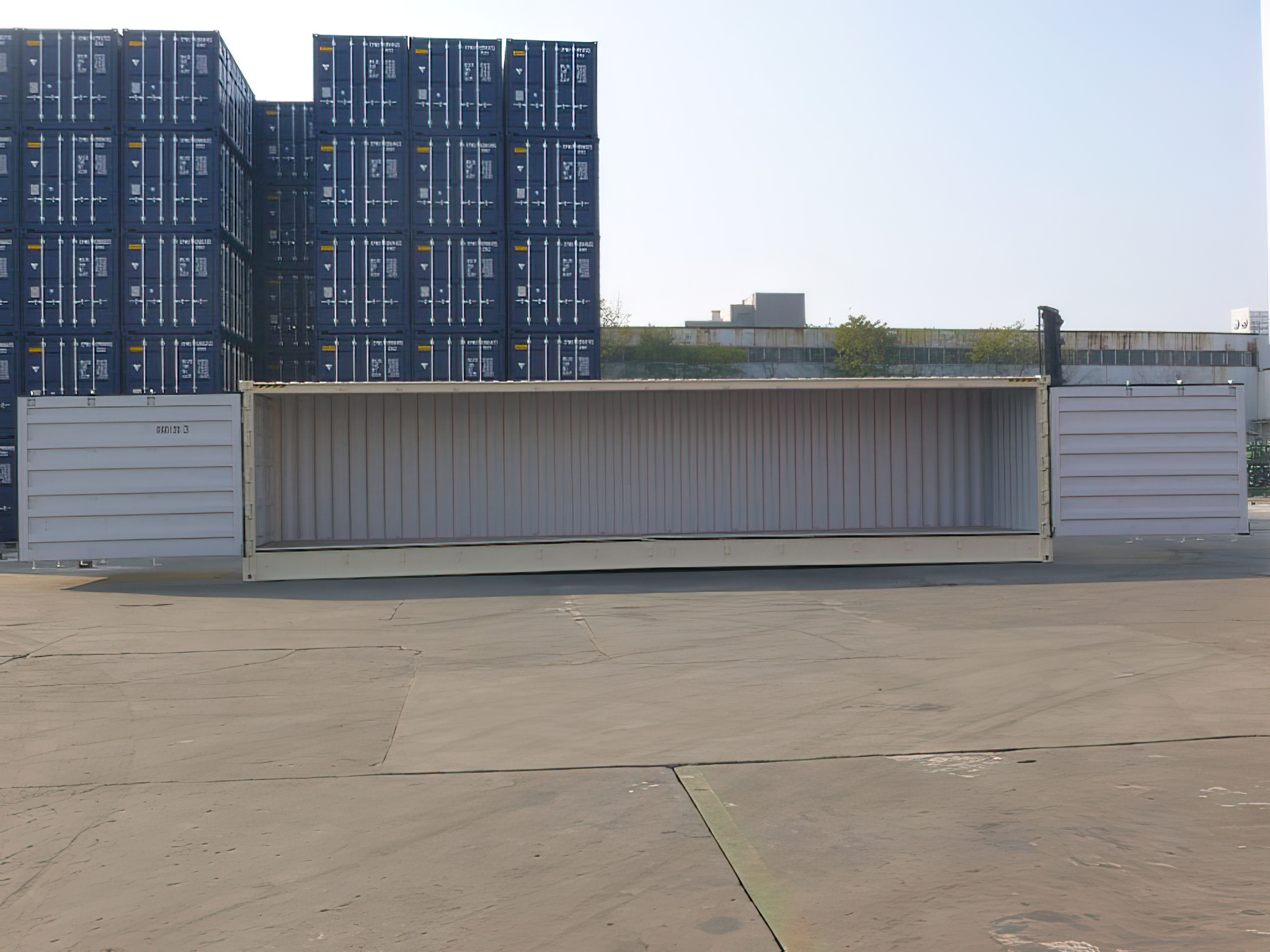
Side doors do not make a shipping container a hazmat container. An open-side unit is a standard ISO box with full-length doors on one side, and what makes it safe and legal for hazardous materials is everything you add to it: the containment under the drums, the ventilation, the electrical rating, the grounding, the placards and the distance from the property line. Buyers who order “a hazmat side-opener” and expect the doors to do the compliance work end up with a locked box a fire marshal will not sign off on. This guide explains what the doors actually buy you, what the rules require, and what to put on the purchase order.
What a side-opening container is
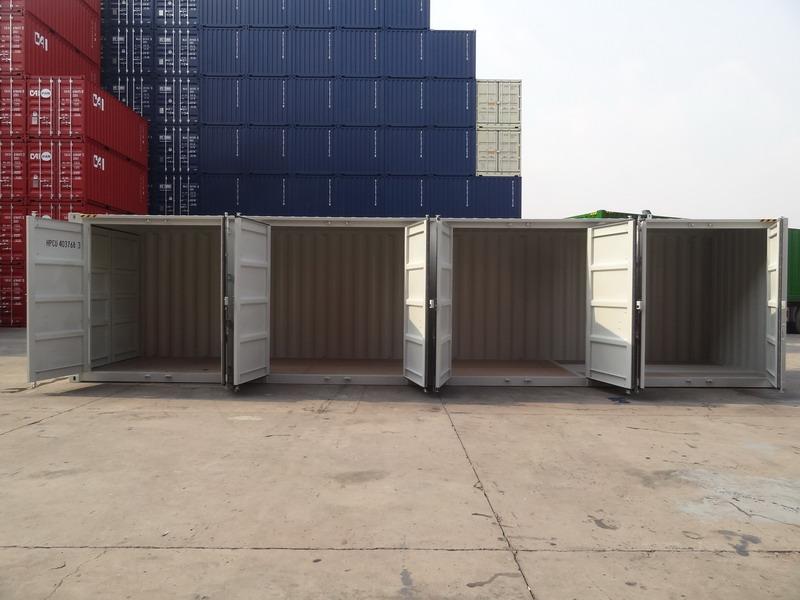
Also sold as an open-side or OS container, it is a 20 ft or 40 ft ISO container (high cube versions are common, sold as 20HCOS and 40HCOS) that keeps the normal end doors and adds bi-fold doors running the length of one side. Open the side and a forklift can reach any pallet, drum or IBC directly instead of tunneling in from the end. The side doors are the most expensive and most vulnerable part of the unit: long gaskets, more hinges, and more places for water to find a way in, which is why used units need a careful door and seal inspection before they store anything that must stay dry. Lummid supplies all four common sizes: 20OS, 20HCOS, 40OS and 40HCOS.
“Hazmat” means two different things, and the rules differ
Moving hazardous materials. When the container travels by road, rail or sea, the container itself only has to be a sound freight container with a current CSC safety approval plate (first examination within five years of manufacture, then at intervals no longer than 30 months, or under an approved continuous examination program). The compliance lives in the packaging, the shipping papers and the placards: under 49 CFR 172.504 and 172.512 a freight container of 640 cubic feet or more carrying hazardous materials must be placarded on each side and each end, and the goods inside must be in authorized packagings and segregated according to the DOT segregation tables. Explosives (Class 1, other than Division 1.4) add a structural inspection of the container itself before it can carry them by vessel (49 CFR 176.172); what buyers check is covered in our ammo-grade acceptance checklist.
Storing hazardous materials on site. This is where most side-opening buyers actually live: a container parked at a job site, plant or yard holding solvents, paints, batteries, pool chemicals or waste drums. Now the freight rules stop mattering and the fire code, OSHA and, for waste, the EPA take over. A standard container meets none of their requirements on its own.
The storage checklist inspectors actually use
Requirements vary by state, by the local fire code edition and by what is stored, so the authority having jurisdiction (usually the fire marshal) has the final word. These are the items that come up on nearly every review of a container used for hazardous storage:
- Secondary containment. A liquid-tight base with no cracks or gaps, sloped or otherwise designed so leaks can be removed, sized to hold 10 percent of the total volume stored or the volume of the largest container, whichever is greater. That wording comes from the EPA hazardous waste rule at 40 CFR 264.175; the fire code and your inspector may set their own figure for liquids that are not waste. In a shipping container this means a welded steel sump floor with removable grating, not a plywood floor with a drip tray.
- Ventilation. OSHA’s rule for inside flammable liquid storage rooms (29 CFR 1910.106(d)(4)) calls for a gravity or mechanical exhaust system that gives a complete change of air at least six times per hour, with a mechanical system switched from outside the door. Most flammable vapors are heavier than air, which is why exhaust openings are usually placed low.
- Electrical. The same OSHA section requires wiring and equipment in rooms storing Category 1 or 2 flammable liquids, or Category 3 liquids with a flashpoint below 100°F, to be approved for Class I, Division 2 hazardous locations. Ordinary container lighting is not rated for hazardous locations.
- Bonding and grounding. Grounding lugs on the container and bonding cables for any transfer of flammable liquids between containers.
- Separation distances. For outdoor storage of flammable liquids in containers, OSHA’s Table H-16 calls for 20 feet from a property line that can be built on and 10 feet from a street or alley for the most flammable liquids (Category 1, Category 2, and Category 3 with a flashpoint below 100°F), and 10 and 5 feet for the rest. The property line distance doubles where neighboring exposures have no fire protection. Local codes may require more, or require a fire-rated storage building instead of a container when the distances cannot be met.
- Signage and security. NFPA 704 diamond or hazard placards on the outside, “No Smoking” signage, and locks that keep the doors closed against unauthorized access and, on the side doors, against wind.
- Segregation. Incompatible classes (oxidizers away from flammables, acids away from bases) need physical separation. This is where side doors earn their keep: bays along the open side can be loaded and inspected independently instead of stacked front to back.
- Waste-specific paperwork. If the contents are hazardous waste, the generator’s accumulation time limits, weekly inspections and labeling under 40 CFR 262 apply regardless of what the container looks like.
Where side doors are worth the premium
Side access pays for itself on tight sites where a forklift cannot square up to an end door, in yards where two crews load at once, and anywhere drums and IBCs need to be inspected or pulled individually without unloading everything in front of them. It also makes weekly container inspections (required for hazardous waste accumulation) something a person can actually do with a flashlight instead of a forklift. For munitions and ordnance the same access argument applies; see which container offers easy cargo access for munitions.
Where a side-opening container is the wrong answer
- A fire-rated building is required. When the quantity or the distance to occupied buildings triggers a requirement for 2-hour or 4-hour fire resistance, the answer is a listed chemical storage building, not a modified container. No standard ISO container carries a fire-resistance rating.
- Temperature control. Reactive or temperature-sensitive materials belong in a refrigerated or insulated unit; see hazmat reefer containers.
- Offshore service. Containers lifted between supply vessels and offshore installations need an offshore-certified unit (DNV 2.7-1, now published as DNV-ST-E271); see DNV offshore containers.
- Compressed gas cylinders and small quantities. Cylinder cages and flammable storage cabinets are cheaper and already listed for the job.
What to put on the purchase order
Specify the container and the outfit separately, because they usually come from different shops. For the box: size, new (one-trip) or used, side-door configuration, CSC plate status, and a door-seal inspection with photos before acceptance. For the outfit: sump capacity in gallons, grating, vent type and airflow, electrical classification, grounding lugs, placard holders, shelving or bay dividers, and who supplies the drawings the fire marshal will want to see. If you buy the box from us, tell us the outfit you need and where the unit is going; Lummid offers modifications such as man doors, electrical and insulation in select markets. Buying the container wholesale and outfitting it locally is often faster than waiting for a pre-built hazmat locker, but only if the local shop knows the code; ask to see a unit they have had approved before.
Frequently asked questions
Is a side-opening container hazmat certified? There is no single hazmat certification for a shipping container. For transport it needs a valid CSC plate and correct placarding; for storage it needs the containment, ventilation, electrical and siting described above, approved by the local authority. Whoever supplies a hazmat-outfitted unit, ask for its spec sheet and check it against the list above.
Can I store hazardous waste in a shipping container? Yes, if the container storage area meets the generator requirements in 40 CFR 262 and, where required, the containment rule in 40 CFR 264.175. Many states add their own conditions; check before you buy the sump.
Does a used open-side container work for this? Often, if the side-door seals pass a water test and the floor is replaced or covered by a steel sump. A cargo-worthy or IICL-inspected unit is a safer starting point than a wind-and-water-tight unit, because it has passed a stricter inspection.
Lummid supplies 20OS, 20HCOS, 40OS and 40HCOS open-side containers, including 20HCOS hazmat units, from depots nationwide, along with other specialty equipment. You can read more about access and loading in our open side containers for sale guide. For bulk pricing, tell us what you plan to store and where, and contact our sales team.
Sources
- OSHA 29 CFR 1910.106, Flammable liquids (storage room ventilation and electrical, Table H-16 outdoor distances)
- 40 CFR 264.175, Containment (secondary containment design and capacity)
- 40 CFR Part 262, Hazardous waste generators (accumulation, inspections, labeling)
- 49 CFR 172.504 and 49 CFR 172.512 (placarding freight containers)
- 49 CFR 176.172 (container inspection for Class 1 explosives by vessel)
- IMO International Convention for Safe Containers (CSC) (safety approval plate and examinations)
